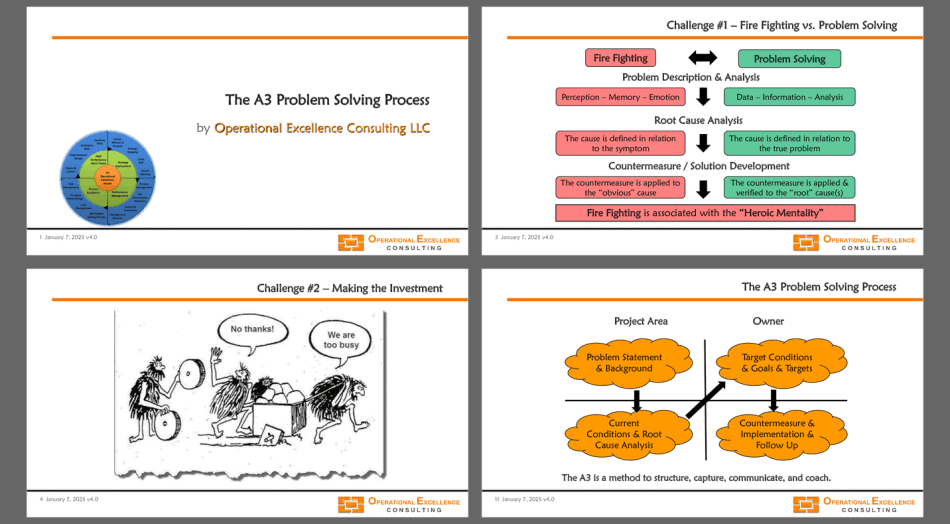

Developed by a Senior Executive and Operational Excellence Coach with experience at organizations including NOKIA, MICROVENTION, and MAGELLAN, this is a presentation and supporting templates to teach the A3 Problem Solving Process.
Understand the A3 Problem Solving Process & Thinking.
Understand the purpose and objective of each phase of the A3 Problem Solving Process.
Understand and apply key problem-solving tools in each phase of the A3 Problem Solving Process.
PROBLEM SOLVING PPT DESCRIPTION
Editor Summary
181-slide PowerPoint training module with supplemental XLSX templates teaching the A3 Problem Solving Process, developed by a Senior Executive and Operational Excellence Coach with experience at NOKIA, MICROVENTION, and MAGELLAN.
Read moreIncludes A3 documentation template, Fishbone Diagram, 5 Whys worksheet, countermeasure selection matrix, implementation plan, and performance measurement tools. Targeted at Operational Excellence teams, quality assurance professionals, project managers, and team leaders for workshops and recurring-issue resolution. Sold as a digital download on Flevy; file formats: PPTX and XLSX.
Use this module when teams must diagnose recurring problems, build shared cause-and-effect understanding, and document countermeasures in a structured workshop setting.
Operational Excellence teams conducting facilitated root-cause workshops using Fishbone and 5 Whys exercises.
Quality assurance professionals designing measurable corrective actions and tracking results with performance measurement tools.
Project managers mapping current conditions and driving implementation using the implementation plan and countermeasure selection matrix.
Team leaders coaching staff through A3 documentation and follow-up/standardization activities.
The A3 approach in the module aligns with iterative PDSA-style continuous improvement by emphasizing Plan-Do-Study-Act cycles and measurable countermeasures.
The objective of this training module is to introduce you to the A3 Problem Solving Process and provide you and your organization with an effective thought process and approach, as well as the basic tools to identify the underlying root cause(s) of a problem or process performance gap.
The A3 Problem Solving Process & Thinking Training Module includes:
1. MS PowerPoint Presentation including 181 slides covering the A3 Problem Solving Process, Problem Solving Tools, and 7 Workshop Exercises.
2. MS Excel A3 Problem Solving Process Documentation Template
3. MS Excel "Is – Is Not" Matrix and Comparative Analysis Template
"After you have downloaded the training material, you can change any part of the training material and remove all logos and references to Operational Excellence Consulting. You can share the material with your colleagues and clients, and re-use it as you need. The only restriction is that you cannot publicly re-distribute, sell, rent or license the material as though it is your own. Thank you."
The A3 Problem Solving Process & Tools training module delves into the core principles of problem-solving, providing a structured approach to identifying and addressing performance gaps. The module covers essential terminologies such as symptom, problem, possible cause, most likely cause, and root cause, ensuring a comprehensive understanding of each concept. It also introduces the A3 Problem Solving Process, which includes steps like background, current conditions, goals and targets, root cause analysis, and countermeasures.
The training material includes practical examples and exercises, such as the "5 Whys Analysis" and the use of Fishbone Diagrams, to facilitate hands-on learning. The module emphasizes the importance of defining the problem accurately, understanding the current conditions, and setting measurable goals. It also provides tools for root cause verification and developing effective countermeasures. This training module is ideal for organizations looking to enhance their problem-solving capabilities and drive continuous improvement.
Got a question about the product? Email us at support@flevy.com or ask the author directly by using the "Ask the Author a Question" form. If you cannot view the preview above this document description, go here to view the large preview instead.
MARCUS OVERVIEW
This synopsis was written by Marcus [?] based on the analysis of the full 181-slide presentation.
Executive Summary
The A3 Problem Solving Process presentation is a structured training module designed to equip teams with a robust methodology for identifying and addressing root causes of problems or performance gaps. Developed by an experienced Operational Excellence Coach, this presentation emphasizes the importance of systematic thinking and collaboration in problem-solving. Participants will learn to apply key tools and techniques throughout the A3 process, ensuring effective root cause analysis and sustainable solutions. The training includes practical exercises and case studies to reinforce learning and application in real-world scenarios.
Who This Is For and When to Use
• Operational Excellence teams seeking to enhance problem-solving capabilities
• Quality assurance professionals focused on continuous improvement
• Project managers leading cross-functional teams in process optimization
• Team leaders and facilitators aiming to coach others in structured problem-solving
Best-fit moments to use this deck:
• During team workshops focused on process improvement initiatives
• When addressing recurring issues that require a systematic approach
• In training sessions aimed at building problem-solving skills across departments
Learning Objectives
• Understand the A3 Problem Solving Process and its phases
• Describe the purpose and objectives of each phase of the A3 process
• Apply key problem-solving tools effectively within each phase
• Utilize assessing questions to evaluate progress at the end of each phase
Table of Contents
• Introduction to A3 Problem Solving (page 2)
• Challenges in Problem Solving (page 3)
• Basic Problem Solving Terminology (page 6)
• The PDSA Cycle (page 7)
• Overview of the A3 Process (page 8)
• When to Use an A3 (page 9)
• Key Activities in Each Phase (pages 11-12)
• Tools for Root Cause Analysis (pages 77-81)
• Countermeasures and Implementation (pages 115-118)
• Follow-Up and Standardization (pages 177-179)
Primary Topics Covered
• A3 Problem Solving Overview - The A3 process visualizes the problem-solving journey on a single page, emphasizing systematic thinking and transparency.
• Root Cause Analysis - Techniques such as Fishbone Diagrams and the 5 Whys are employed to identify and verify root causes effectively.
• Countermeasure Development - Focuses on creating actionable solutions to eliminate root causes and improve processes.
• Implementation and Follow-Up - Ensures that countermeasures are effectively executed and monitored for sustained improvement.
• Performance Measurement - Discusses the importance of metrics and feedback in evaluating the effectiveness of implemented solutions.
• Mistake-Proofing Techniques - Introduces Poka-Yoke devices and principles to prevent errors in processes.
Deliverables, Templates, and Tools
• A3 Problem Solving Process template for structured documentation
• Fishbone Diagram template for root cause analysis
• 5 Whys analysis worksheet for identifying underlying issues
• Countermeasure selection matrix for evaluating potential solutions
• Implementation plan template for tracking actions and responsibilities
• Performance measurement tools for assessing the effectiveness of solutions
Slide Highlights
• Overview of the A3 Problem Solving Process, detailing each phase
• Visual representation of the PDSA Cycle as a foundation for continuous improvement
• Examples of Fishbone Diagrams illustrating potential causes of problems
• Case studies demonstrating the application of the A3 process in real scenarios
• Guidelines for effective brainstorming sessions and team collaboration
Potential Workshop Agenda
Introduction to A3 Problem Solving (30 minutes)
• Overview of the A3 process and its significance
• Discussion of challenges in traditional problem-solving approaches
Root Cause Analysis Techniques (60 minutes)
• Hands-on activity using Fishbone Diagrams
• Group exercise applying the 5 Whys method
Developing and Implementing Countermeasures (90 minutes)
• Brainstorming session for potential solutions
• Selection of countermeasures using a solution matrix
Follow-Up and Standardization (30 minutes)
• Discussion on monitoring effectiveness and preventing recurrence
• Sharing of lessons learned and best practices
Customization Guidance
• Tailor the A3 template to reflect your organization's specific terminology and processes
• Adjust case studies to align with real-world challenges faced by your team
• Incorporate organizational metrics and performance indicators into the measurement tools
Secondary Topics Covered
• The role of leadership in fostering a problem-solving culture
• Techniques for effective team collaboration and communication
• Strategies for engaging stakeholders in the problem-solving process
• Methods for documenting and sharing lessons learned
Topic FAQ
What are the typical phases of an A3 problem solving report?
An A3 report structures problem solving into stages such as background, current conditions, goals and targets, root cause analysis, countermeasures, implementation, and follow-up/standardization. The training deck presents these phases with guidance and assessing questions across slides including the overview and key activity pages 11–12.
How is root cause analysis conducted within the A3 approach?
Root cause analysis in A3 combines structured techniques to identify and verify causes, notably Fishbone Diagrams to map potential factors and the 5 Whys to drill down to underlying causes. The presentation includes templates and examples of both tools for workshop use on pages 77–81.
What tools support implementation and monitoring after an A3 is written?
Implementation and monitoring are supported by templates such as an implementation plan to track actions and responsibilities, a countermeasure selection matrix to evaluate options, and performance measurement tools to assess impact of solutions, with follow-up and standardization guidance in the later slides.
What should I look for when choosing an A3 training kit for my team?
Prioritize kits that combine teachable slides, editable A3 templates, practical exercises or case studies, and Excel tools for documentation and measurement. Also check licensing for internal reuse and customization; this module provides editable materials across a 181-slide PowerPoint and accompanying Excel templates.
How long does a typical A3 workshop take to deliver?
A suggested workshop agenda in the materials totals about 3.5 hours: 30 minutes introduction, 60 minutes root-cause activities, 90 minutes developing and selecting countermeasures, and 30 minutes on follow-up and standardization, suitable for a half-day session.
Which A3 tools are most useful for addressing recurring production quality defects?
For recurring defects, use Fishbone Diagrams to map cause categories, 5 Whys to verify the most likely root cause, Poka‑Yoke mistake‑proofing ideas to prevent recurrence, and a countermeasure selection matrix to prioritize solutions, combined with an implementation plan to track actions.
Can the A3 problem solving approach be applied outside manufacturing?
Yes; the A3 process and its tools are presented as adaptable to service and administrative contexts, with guidance on tailoring the A3 template, case studies, and exercises to non-manufacturing problems in the A3 Problem Solving Process & Tools module.
Are ready-made A3 templates worth buying for a small team?
Ready-made templates can save preparation time and provide a structured teaching sequence, practical exercises, and editable documentation; this module explicitly allows internal customization and reuse and includes a 181-slide PowerPoint plus Excel A3 and comparative analysis templates.
Document FAQ
These are questions addressed within this presentation.
What is the A3 Problem Solving Process?
The A3 Problem Solving Process is a structured approach to identifying and addressing root causes of problems, visualized on a single A3-sized page.
How can I apply the A3 process in my organization?
Utilize the provided templates and tools to guide your team through each phase of the A3 process, ensuring systematic thinking and collaboration.
What tools are included in the presentation?
The presentation includes templates for the A3 process, Fishbone Diagrams, 5 Whys analysis, and countermeasure selection matrices.
How can I measure the effectiveness of implemented solutions?
Use performance measurement tools included in the presentation to track progress and assess the impact of countermeasures on process performance.
Can the A3 process be used for non-manufacturing problems?
Yes, the A3 process is versatile and can be applied to various contexts, including service industries and administrative processes.
What are Poka-Yoke devices?
Poka-Yoke devices are mistake-proofing tools designed to prevent errors in processes by ensuring correct actions are taken.
How do I engage my team in the A3 process?
Encourage collaboration through brainstorming sessions and workshops, utilizing the provided templates to facilitate participation and input.
What if I encounter resistance to the A3 process?
Address concerns by demonstrating the benefits of the A3 approach through successful case studies and engaging leadership support.
Glossary
• A3 - A paper size (11 × 17 inches) used to visualize the problem-solving process.
• Root Cause - The fundamental reason for a problem, verified through analysis.
• Fishbone Diagram - A visual tool for identifying potential causes of a problem.
• 5 Whys - A technique for exploring the cause-and-effect relationships underlying a problem.
• Poka-Yoke - A mistake-proofing device or principle designed to prevent errors in processes.
• Countermeasure - An action taken to eliminate or mitigate a root cause.
• Performance Measure - A metric used to assess the effectiveness of a solution or process.
• Deming Cycle (PDSA) - A continuous improvement model consisting of Plan, Do, Study, Act phases.
• SMART Goals - Specific, Measurable, Attainable, Realistic, and Timely objectives set for improvement initiatives.
• Stakeholder - An individual or group with an interest in the outcome of a project or process.
• Gemba - The place where work is done, often used in Lean methodologies to emphasize observation and engagement.
• Affinity Diagram - A tool for organizing ideas and findings into natural relationships.
• Interrelationship Diagram - A visual representation of the relationships between different factors or causes.
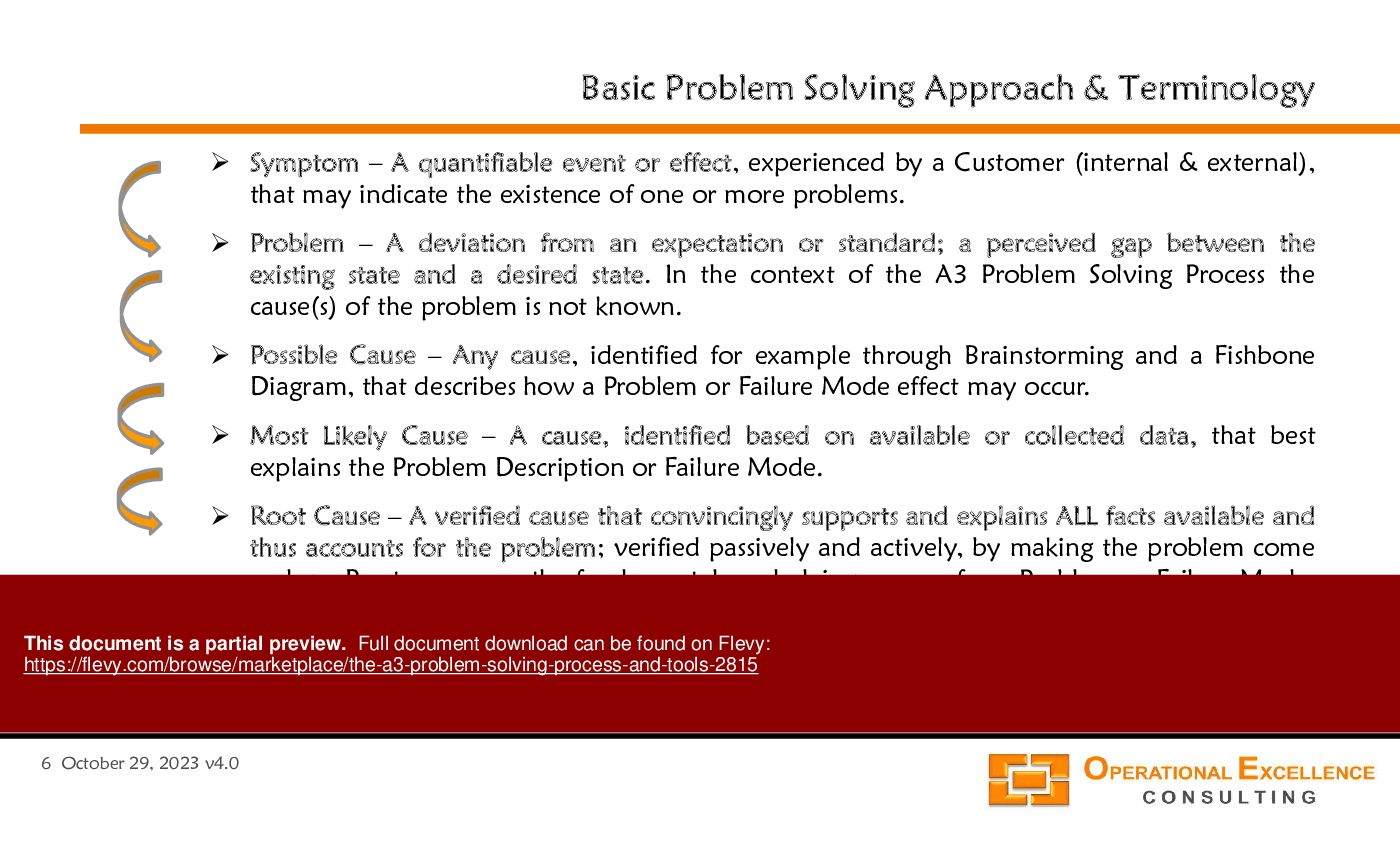
This PPT slide outlines a structured problem-solving approach, introducing key concepts such as "Symptom," defined as a measurable event indicating underlying issues. The term "Problem" refers to deviations from expected standards, highlighting the need to recognize gaps between current and desired states. "Possible Cause" involves brainstorming techniques like Fishbone Diagrams to explore contributing factors. The "Most Likely Cause" narrows down potential issues based on data, shifting from broad speculation to targeted analysis. Finally, "Root Cause" is a verified explanation accounting for all observed facts, emphasizing thorough investigation to address fundamental issues rather than just symptoms. Factors like management policies and human errors illustrate the complexity of organizational problem-solving.
This PPT slide presents an interrelationships diagram mapping barriers to effective problem-solving in statistical thinking. Key challenges include a misunderstanding of the statistical thinking paradigm, leading to a rejection of statistical methods and resistance to adoption. Data accessibility hampers decision-making, while a lack of consensus on measurement indices creates confusion and misalignment among teams. Competing priorities detract from collaborative problem-solving efforts. Motivation to change is critical, as a lack of drive can stall progress. Fear of technical tools inhibits adoption, and insufficient leadership support can cause initiatives to falter. Addressing these interconnected barriers can enhance organizational capability and drive better outcomes.

This PPT slide illustrates the PDSA (Plan-Do-Study-Act) cycle, a structured approach to problem-solving and continuous improvement. The 4 key phases are:
1. Plan: Identify issues, set objectives, and determine necessary changes to align actions with organizational goals.
2. Do: Implement the identified changes with precision to ensure effective practice.
3. Study: Monitor and analyze results to understand the impact of changes and gather data for future decisions.
4. Act: Evaluate outcomes and integrate learnings into standard practices to standardize successful changes and document lessons learned.
The PDSA cycle serves as a foundational framework for enhancing operational efficiency and fostering a culture of continuous learning and adaptation.
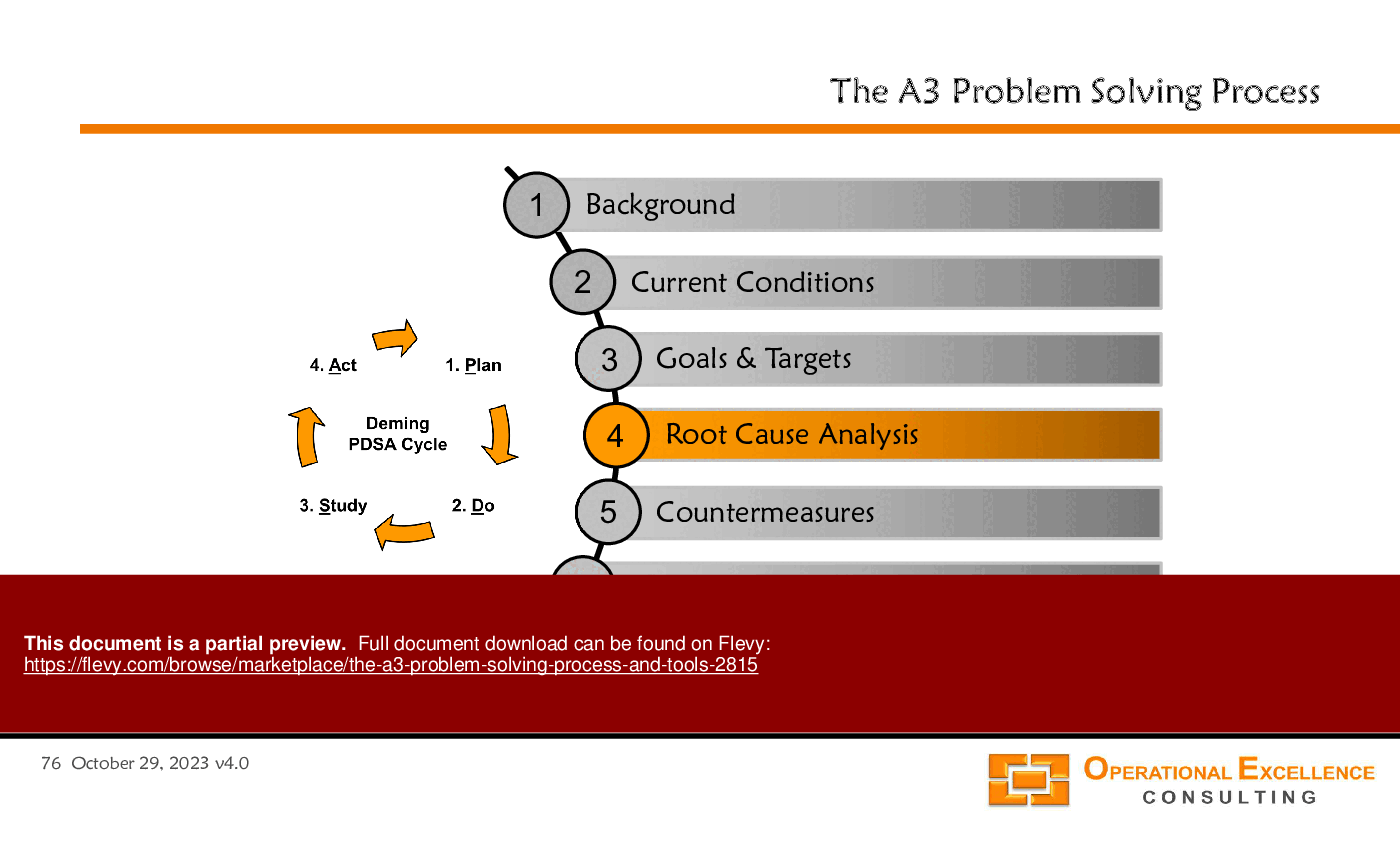
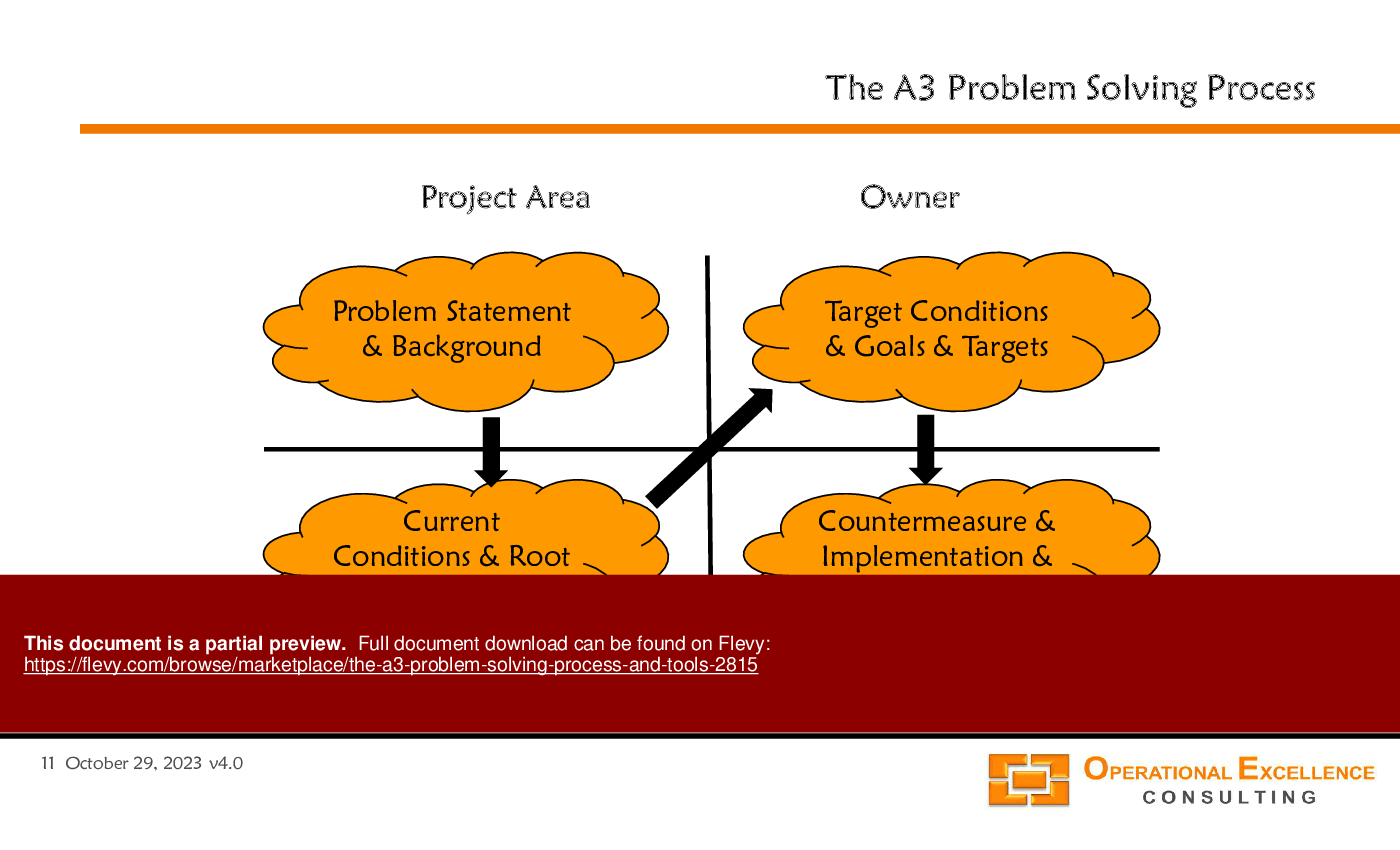
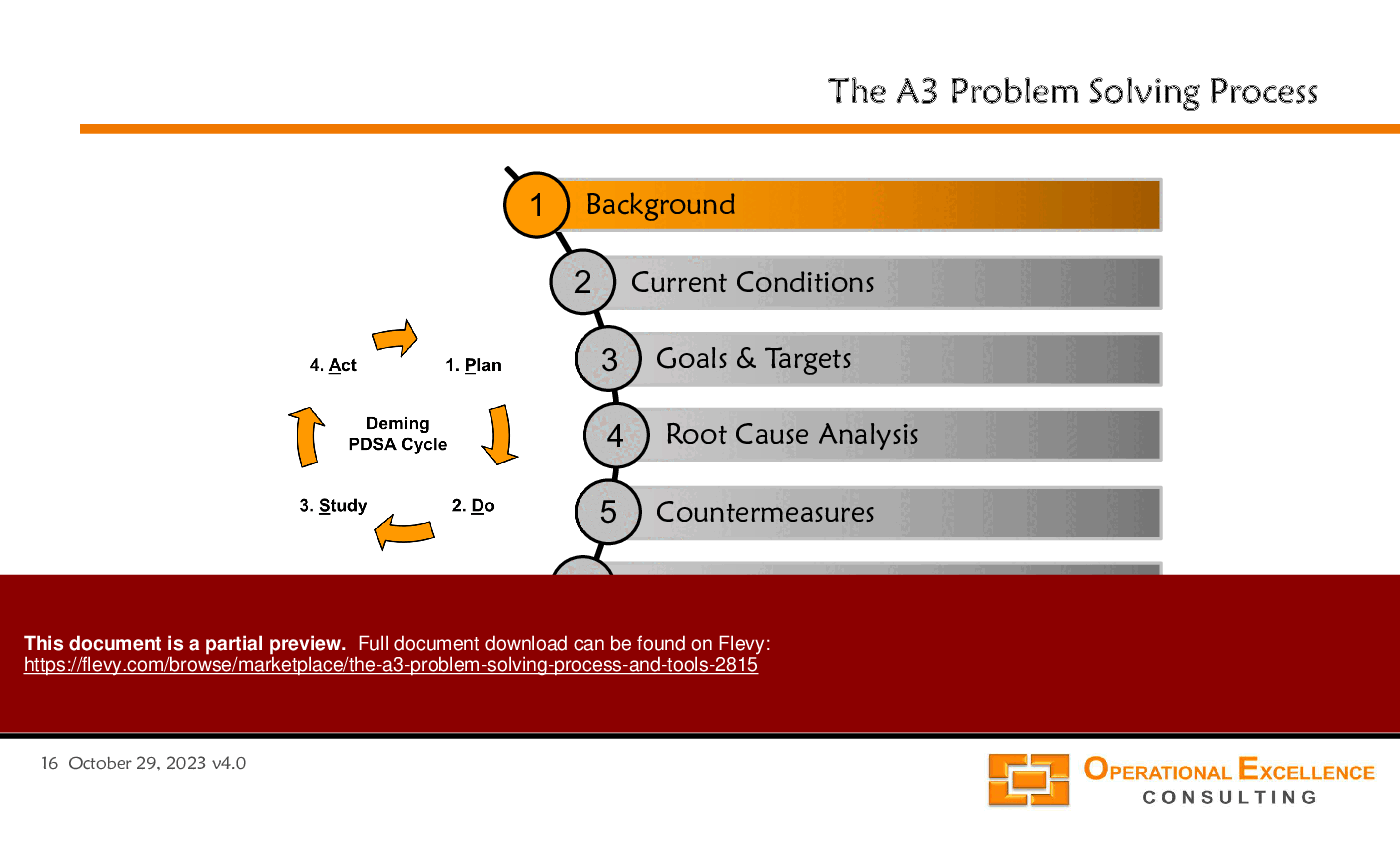
The A3 Problem Solving Process provides a systematic approach for organizations to tackle challenges, illustrated through a circular flow diagram of the Deming PDSA (Plan-Do-Study-Act) cycle and a linear list of the A3 methodology's key components. The circular diagram emphasizes the iterative nature of problem-solving, highlighting continuous improvement through the phases of Plan, Do, Study, and Act. The linear section details 7 critical steps: 'Background' sets the context; 'Current Conditions' assesses the existing situation; 'Goals & Targets' defines success; 'Root Cause Analysis' identifies underlying issues; 'Countermeasures' develops solutions; 'Implementation' executes these solutions; and 'Follow Up' ensures sustained changes. This structured approach fosters clarity in problem-solving and promotes a culture of continuous improvement, enhancing operational efficiency and driving sustainable growth.
The "IS - IS NOT" matrix is a structured problem-solving tool organized into 2 columns: what occurs and what does not occur. The first section addresses the "What?" aspect, prompting identification of the object and its associated defect, establishing a clear understanding of the problem. Subsequent sections explore "Where?" and "When?" to pinpoint the defect's location and timeline, facilitating pattern recognition. The "How Big?" question quantifies defects in terms of frequency and size, essential for prioritizing issues based on impact. Accompanying prompts encourage deeper inquiry, making this matrix a practical framework for systematic problem dissection and informed decision-making.
The Affinity Diagram outlines key problem statements related to current market dynamics across 4 categories. The first category addresses globalization of quality, highlighting the demand for high-quality, low-cost goods and the importance of individual customization as market differentiation diminishes. The second category emphasizes user experience, stating that non-user-friendly products are unacceptable and that usability must be prioritized. The third category focuses on the necessity for complete service, with local service availability and rapid delivery of replacement parts within 24 hours being crucial. The final category discusses customer behavior regarding Total Quality Management (TQM), noting that TQM-aware customers share both positive and negative experiences, necessitating high service standards to foster loyalty.
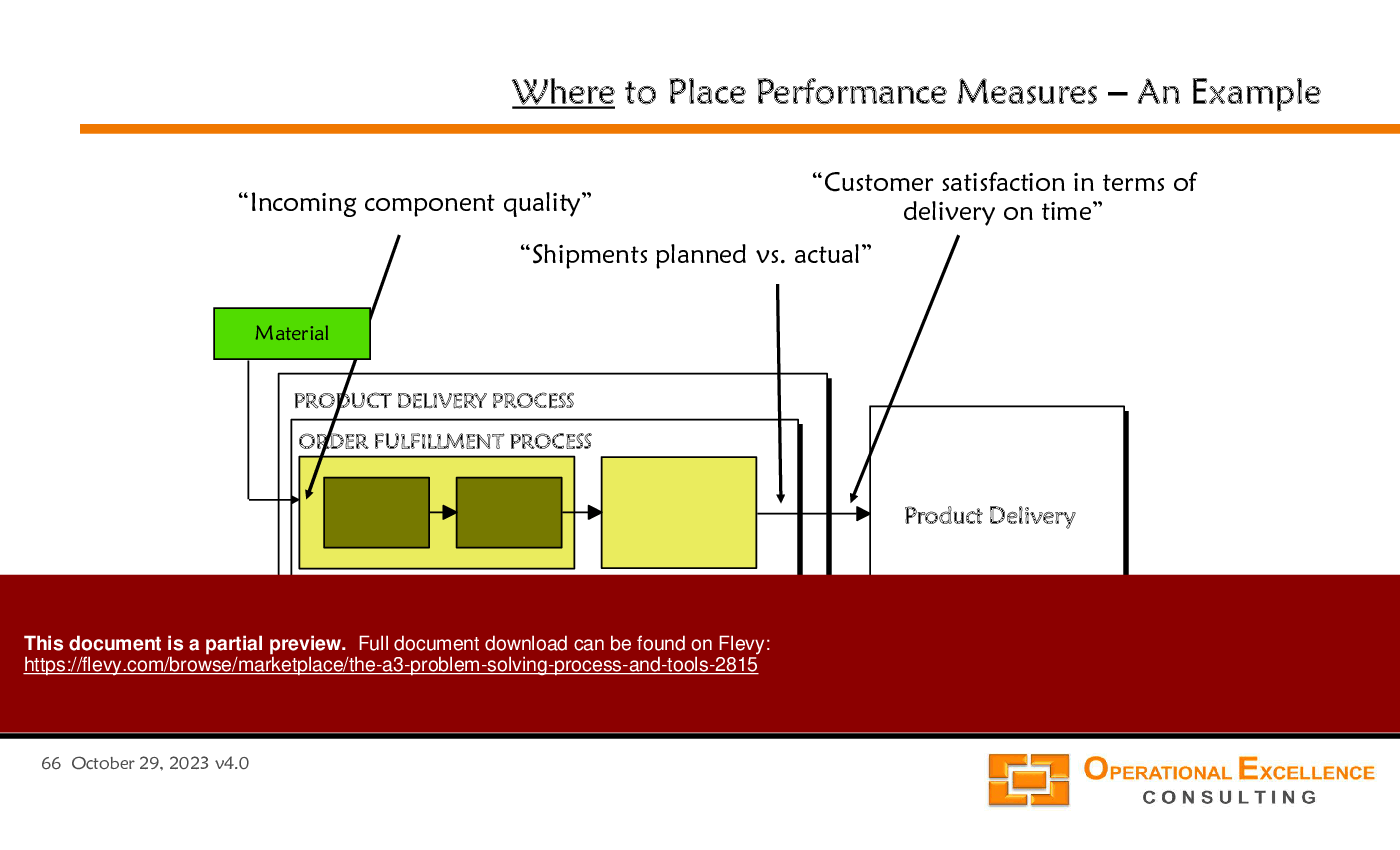
This PPT slide illustrates the integration of performance metrics within product delivery and order fulfillment. Key performance indicators include "Incoming component quality," essential for monitoring material quality to reduce defects, and "Customer satisfaction in terms of delivery on time," which directly impacts customer retention and brand reputation. The metric "Shipments planned vs. actual" tracks discrepancies between expected and actual shipment volumes, vital for identifying supply chain inefficiencies. The visual representation of the "Product Delivery Process" and "Order Fulfillment Process" emphasizes that these metrics should be embedded within the operational framework for real-time adjustments and continuous improvement. This alignment drives operational excellence and enhances customer satisfaction.
The SCAMPER technique is a structured problem-solving approach aimed at enhancing sales processes. It poses the question: "How can I increase sales in my business?" Each letter of SCAMPER represents a method of exploration:
- Substitute: Examine elements in the selling process that could be replaced or altered.
- Combine: Integrate selling with other business activities to create synergies.
- Adapt: Tailor successful strategies from other contexts to the current selling approach.
- Magnify: Emphasize aspects of the sales process that may yield better results.
- Put to Other Uses: Apply selling techniques in different contexts.
- Eliminate: Remove or simplify elements to streamline processes.
- Rearrange: Rethink the sequence or structure of the sales approach.
These questions provoke innovative thinking, encouraging individuals to reassess challenges and discover new solutions.
This PPT slide outlines critical scenarios for utilizing the A3 problem-solving methodology. Key reasons to employ A3 include fostering collaboration for complex problems, enhancing clarity in thought processes, and bridging knowledge gaps through systematic analysis. Conversely, the A3 method may be counterproductive if the root cause and solutions are already clear, or if the solution is presumed known and agreed upon. Additionally, using A3 merely as a reporting tool can lead to superficial engagement. This guide encourages teams to reflect on the context of problem-solving efforts, ensuring effective application of the A3 approach rather than default usage.
This PPT slide contrasts 2 performance issues: "Change-Induced" and "Day-One-Deviation." A "Change-Induced" problem occurs when historical performance metrics deteriorate due to a process change, leading to a deviation from expected performance. In contrast, "Day-One-Deviation" indicates that the necessary conditions for achieving expected performance were never present, resulting in stagnant performance from the outset. Understanding these distinctions is essential for diagnosing root causes of performance gaps and informing corrective strategies. This framework aids organizations in enhancing operational efficiency and driving performance improvement initiatives.
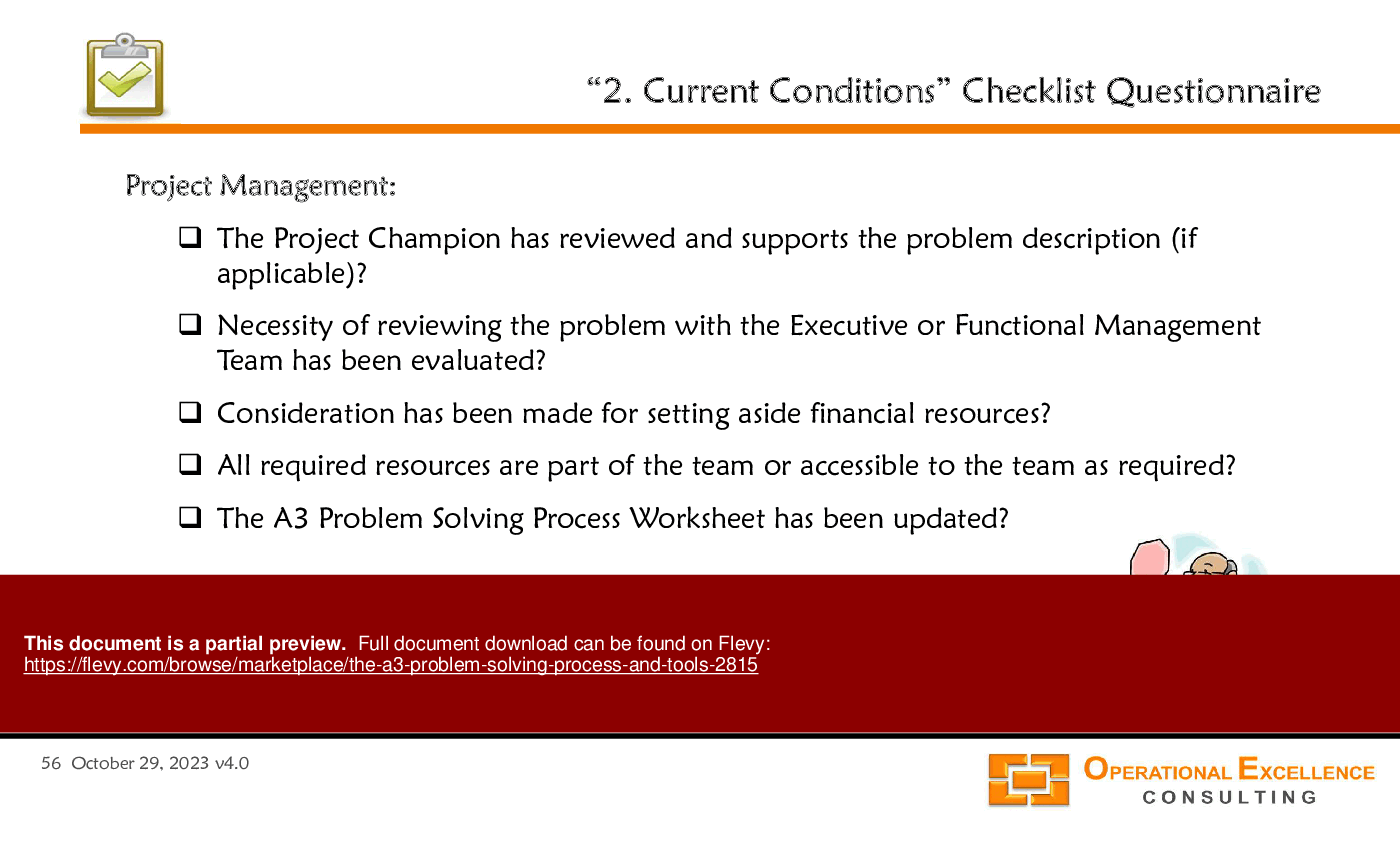
This PPT slide presents a checklist questionnaire for assessing problem-solving processes, distinguishing between "Change-Induced" and "Day-One-Deviation" scenarios. It emphasizes conducting an "IS – IS NOT" analysis to document the problem's specifics, including scope and impact. Developing visual tools such as Process Flowcharts, Value Stream Maps, or Spaghetti Diagrams is essential for clarifying processes and identifying problem origins. The checklist prompts a review of process details to pinpoint when the problem first appeared and encourages evaluation of recurring problem patterns. Comprehensive data collection and analysis are critical for informed decision-making and effective problem resolution, enabling organizations to systematically address issues and enhance problem-solving capabilities.
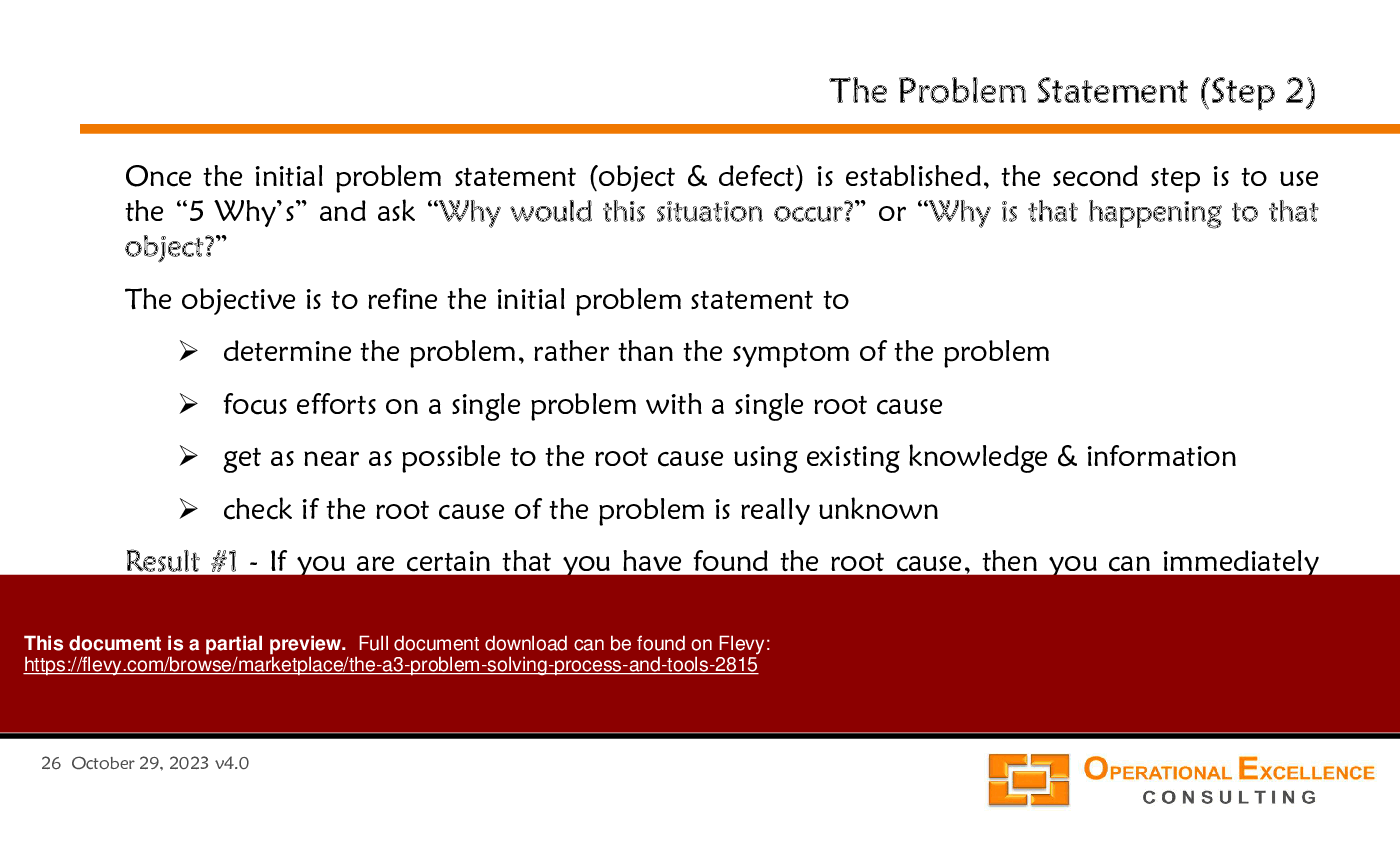
This PPT slide outlines a structured approach to articulating a problem statement by identifying root causes through iterative "Why?" inquiries. The initial problem highlights a lack of an appropriate rework tool, leading to the first inquiry revealing that the tool was not in inventory. The second inquiry uncovers that the supplier failed to deliver the replacement tool due to not receiving the purchase order on time, indicating a breakdown in communication. The final question, "Why?" results in an ambiguous answer: "We don’t know," revealing gaps in understanding or accountability. This progression emphasizes the importance of thorough investigation in problem-solving, illustrating that root causes often lie deeper than surface issues. By employing this method, organizations can refine their problem-solving methodologies and effectively address core operational challenges.
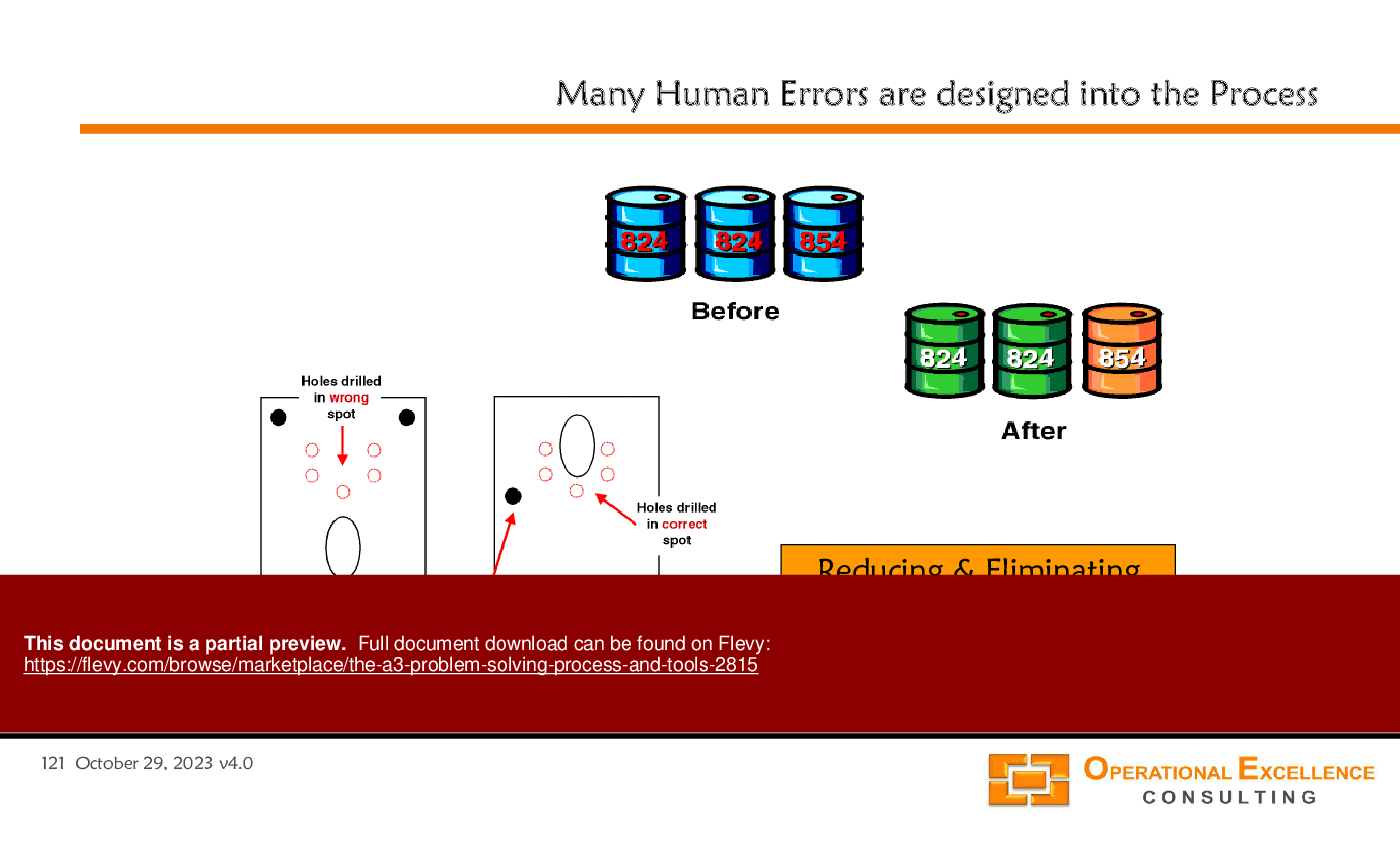
This PPT slide discusses mistake-proofing strategies to reduce human errors in operational processes. It features a welding machine setup with a sensor that triggers a visual and audio alarm when a weld nut is missing, halting operations for corrective action. This mechanism is essential for maintaining quality and efficiency in manufacturing. Additionally, it highlights a consumer-friendly approach to mistake-proofing through thoughtful product design, enhancing usability and customer satisfaction. This dual benefit of mistake-proofing not only mitigates production errors, but also improves the end-user experience. The mention of "and many more" suggests broader applications of mistake-proofing across various industries, guiding organizations in enhancing operational reliability and customer satisfaction.
Source: Best Practices in Problem Solving, A3 PowerPoint Slides: A3 Problem Solving Process & Tools PowerPoint (PPTX) Presentation Slide Deck, Operational Excellence Consulting LLC
Developed by a Senior Executive and Operational Excellence Coach with experience at organizations including NOKIA, MICROVENTION, and MAGELLAN, this is a presentation and supporting templates to teach the A3 Problem Solving Process.
Operational Excellence Consulting LLC provides assessments, training solutions, kaizen event facilitation, and implementation support to enable our clients to achieve superior performance through Operational Excellence - Strategy Deployment & Hoshin Planning, Performance Management & Balanced Scorecards, Process Excellence & Lean Six Sigma, and High
... [read more] Performance Work Teams.
Frank Adler co-founded OEC LLC in 2009 to follow his passion for Operational Excellence and to be able to work with individuals and organizations that share this passion.
He is an accomplished and recognized Operational Excellence, Lean Management, and Six Sigma coach, with over 20 years of domestic and international executive leadership experience in General Management, multi-site Operations & Supply Chain Management, and Quality & Customer Support Management.
Frank is a certified and experienced Lean Six Sigma Master Black Belt with a proven track record of implementing these methods, concepts, and tools in various organizations and industries.
He holds a Master of Science in Mathematics & Physics from the Freie University of Berlin (Germany) and a Doctor of Philosophy in Applied Mathematics & Industrial Economics from the Helsinki University of Technology (Finland).
Since 2012, we have provided business templates to over 10,000 businesses and organizations of all sizes, from startups and small businesses to the Fortune 100, in over 130 countries.
"FlevyPro has been a brilliant resource for me, as an independent growth consultant, to access a vast knowledge bank of presentations to support my work with clients. In terms of RoI, the value I received from the very first presentation I downloaded paid for my subscription many times over! The
quality of the decks available allows me to punch way above my weight – it's like having the resources of a Big 4 consultancy at your fingertips at a microscopic fraction of the overhead.
"
– Roderick Cameron, Founding Partner at SGFE Ltd
"As a consultant requiring up to date and professional material that will be of value and use to my clients, I find Flevy a very reliable resource.
The variety and quality of material available through Flevy offers a very useful and commanding source for information. Using Flevy saves me time, enhances my expertise and ends up being a good decision."
– Dennis Gershowitz, Principal at DG Associates
"Flevy.com has proven to be an invaluable resource library to our Independent Management Consultancy, supporting and enabling us to better serve our enterprise clients.
The value derived from our [FlevyPro] subscription in terms of the business it has helped to gain far exceeds the investment made, making a subscription a no-brainer for any growing consultancy – or in-house strategy team."
– Dean Carlton, Chief Transformation Officer, Global Village Transformations Pty Ltd.
"FlevyPro provides business frameworks from many of the global giants in management consulting that allow you to provide best in class solutions for your clients."
– David Harris, Managing Director at Futures Strategy
"As a young consulting firm, requests for input from clients vary and it's sometimes impossible to provide expert solutions across a broad spectrum of requirements. That was before I discovered Flevy.com.
Through subscription to this invaluable site of a plethora of topics that are key and crucial to consulting, I
have been able to exceed expectations and deliver quality advice and solutions to my clients. The quality and expertise of the authors are exemplary and gives me great confidence to use as part of my service offerings.
I highly recommend this company for any consultant wanting to apply international best practice standards in their service offerings.
"
– Nishi Singh, Strategist and MD at NSP Consultants
"As a niche strategic consulting firm, Flevy and FlevyPro frameworks and documents are an on-going reference to help us structure our findings and recommendations to our clients as well as improve their clarity, strength, and visual power. For us, it is an invaluable resource to increase our impact and value."
– David Coloma, Consulting Area Manager at Cynertia Consulting
"I have used Flevy services for a number of years and have never, ever been disappointed. As a matter of fact, David and his team continue, time after time, to impress me with their willingness to assist and in the real sense of the word. I have concluded in fact
that it is not at all just a repository of documents/resources but, in the way that David and his team manage the firm, it is like dealing with consultants always ready to assist, advise and direct you to what you really need, and they always get it right.
I am an international hospitality accomplished senior executive who has worked and lived during the past 35 years in 23 countries in 5 continents and I can humbly say that I know what customer service is, trust me.
Aside from the great and professional service that Flevy's team provide, their wide variety of material is of utmost great quality, professionally put together and most current.
Well done Flevy, keep up the great work and I look forward to continue working with you in the future and to recommend you to a variety of colleagues around the world.
"
– Roberto Pelliccia, Senior Executive in International Hospitality
"As an Independent Management Consultant, I find Flevy to add great value as a source of best practices, templates and information on new trends. Flevy has matured and the quality and quantity of the library is excellent. Lastly the price charged is reasonable, creating a win-win value for
the customer, Flevy and the various authors. This is truly a service that benefits the consulting industry and associated clients. Thanks for providing this service.
"
– Jim Schoen, Principal at FRC Group
Save with Bundles
This document is available as part of the following discounted bundle(s):
Receive our FREE whitepaper on the Top 101 Consulting Frameworks
Download our 200+ page guide summarizing the Top 101 Management Consulting Frameworks. Each framework provides a structured approach to analyzing and solving a common business problem.